the questions we become

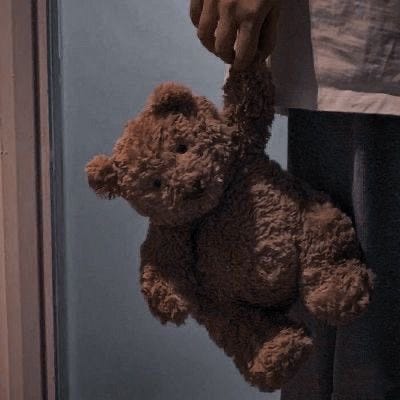
It hasn’t healed. Not really.
Some things don’t in all honesty. They just settle. Like dust on a shelf, or silence no one wants to break.
For years I told myself the distance between me and her was ordinary, that every family has its polite estrangements, its fractures disguised as love. But what we had wasn’t distance. It was space. A vacuum that once again suffocated something that was already dead to begin with.
“The woman I needed to call my mother was silenced before I could even speak.”
— Adrienne Rich
It’s a strange thing to grow up next to someone who is both origin and absence. To know that your body once lived inside theirs, and yet the emotional umbilical cord was severed long before birth.
Sometimes I think her coldness didn’t start with me. Maybe it leaked out of her long before I arrived. Bethany Webster calls this the mother wound: an inheritance of deprivation passed quietly from one generation to the next. Women who don’t know warmth can’t always recognise when they’re withholding it. Understanding that doesn’t make it hurt less. Knowing the architecture of pain doesn’t mean you can walk through it unharmed.
“The mother’s love is peace. It need not be acquired, it need not be deserved.”
— Erich Fromm
But what if you spend your whole life trying to earn something that was meant to be unconditional? What happens to a child who learns early that love is performance and silence is punishment?
You become fluent in apology.
You shrink to fit someone else’s comfort.
You learn to equate obedience with safety.
When I was nine, my difference (my not-quite-neurotypical way of being ) was treated as defiance. Tough love, she called it. I don’t think she noticed the second word. The silence that followed her rage was unbearable; as if oxygen itself were being rationed and suffocation was inevitable. I lived to avoid it, tailoring myself to her moods until I didn’t know where I ended and she began.
This training taught me that the internal world is inherently untrustworthy. I learned to live not in my own feelings, but in anticipation of hers. My entire emotional operating system was calibrated to instability, permanently set to a state of high alert. I was never taught how to feel an emotion and let it pass; I was only taught how to manage her reaction to my feeling.
That’s why, even now, the slightest stress doesn’t just cause anxiety, it triggers a cyclone of total panic. Where others register annoyance, I register annihilation. I was never given the foundation for emotional stability. I was trained to constantly anticipate the mood shift, the withdrawal, the threat of being cut off. Every interaction became a high-stakes rehearsal for rejection, driving the frantic effort to avoid abandonment that still dictates my life.
And in trying to survive her, I lost the blueprint for myself. The person she approved of is the only one who survived, but that survivor is not me. I exist as a constant improvisation, a series of reactions to a fear I can’t outrun. Every interaction becomes a rehearsal for rejection. Every relationship since has been tainted by the subconscious dread that the floor is about to give way. The cost of survival was not just the suppression of my true self, but the perpetual, internal belief that I am inherently unworthy of stable love.
By fifteen, pain had become the only language I thought she might hear. She didn’t. She just mocked the dialect. It should’ve hurt more if attention was what you wanted, she said. I learned then that even my suffering could disappoint her. The deepest wound wasn’t the pain itself, but the utter invalidation of it.
Sometimes I still wonder if the coldness is mine, if I inherited it as one inherits eye colour or blood. I feel it now. I am cold. I strive against it, yet each time the distance settles, each time the hardness takes root in my chest, I am reminded that I am my mother’s daughter. I am cold toward her. I lack the empathy I know I ought to offer, not out of disregard, but out of a profound, simmering resentment and a conviction that she is owed no tenderness for what she imposed upon me. She has never afforded me the same grace for my struggles; why should I grant it to her? And in that justified fury, in the desire for a moral balance of suffering, I must restrain myself. Because I am not her. To allow the coldness to serve as both shield and weapon is to become the very presence I seek to undo.
This coldness is the paradoxical consequence of the heat of my rage; it is the ultimate defense mechanism, a reflexive barrier I throw up to shield the terrified child inside. It is the scar tissue on my ability to trust, the protective layering that keeps the world out. I understand that this coldness is a desperate measure, a preemptive strike against the terrifying possibility of caring too deeply, only to be abandoned or annihilated again. My body learned early that warmth is a vulnerability that will be exploited. To be cold is to be armoured. The tragic irony is that I only learned how to defend myself by using the same isolating tactics that hurt me most.
“I think I am, therefore I am — I think. I could be nothing else but this wound.”
— Sylvia Plath
Maybe that’s what we become: not healed versions of our mothers, but ongoing questions:
Can you forgive someone who never learned softness? Can you build warmth from scratch, using hands that only knew cold? Can you be consumed by the fire of your own anger without becoming the ice? Is it possible to be both the damaged artefact and the architect of your own repair?
I don’t have the answers. But I know this: I refuse to pass it on. Carrying that lineage further would be a quiet act of violence. Her blood runs through me, but it will stop here.
I was a child once. I was meant to be loved, not corrected. The scar remains. Hers, mine..
If you decide to have children, may you give them the love you wanted to receive ❤️
I can't imagine how hard this journey has been, you have all my respect, keep strong and proud on who you are